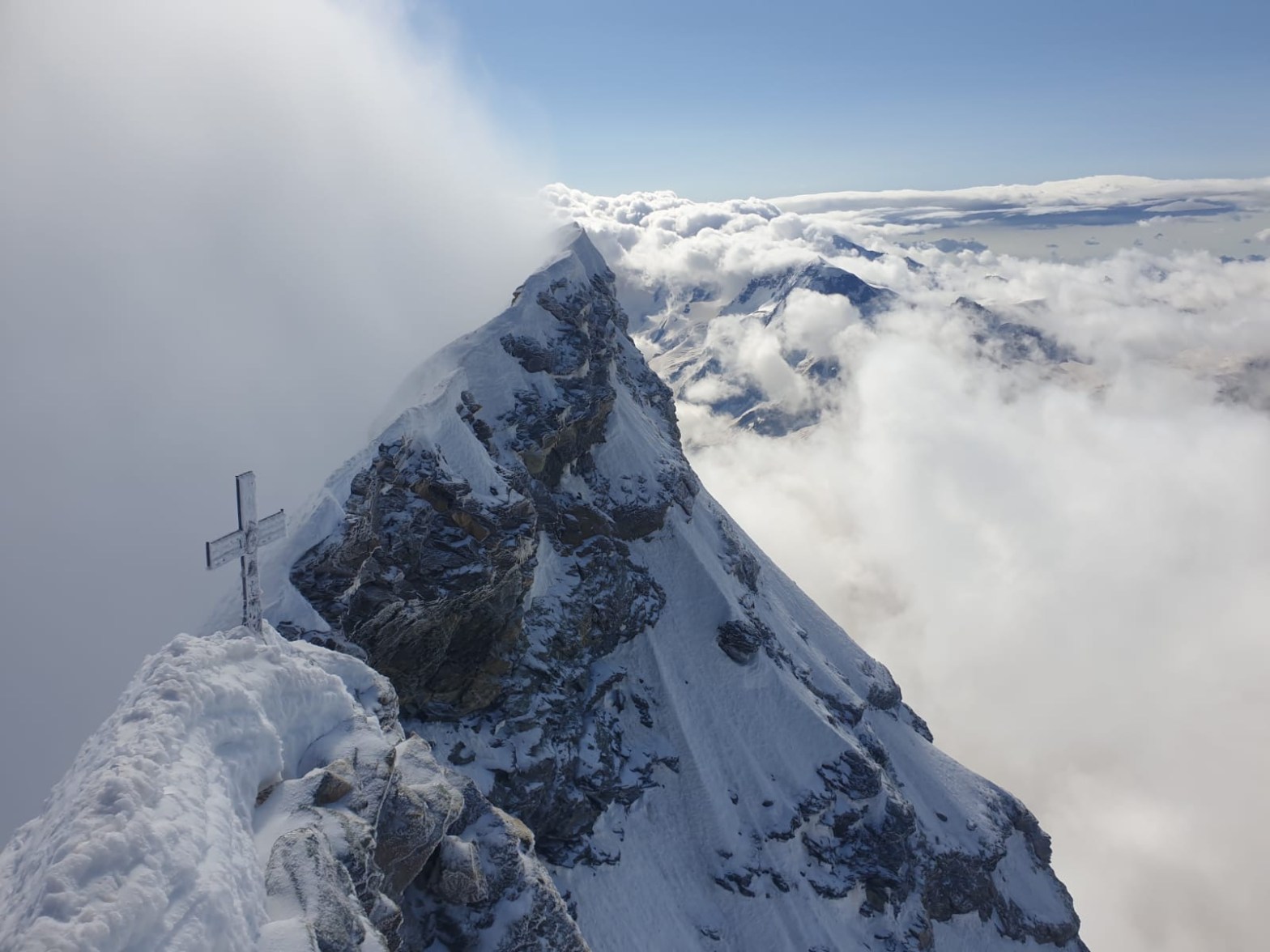
The mountain
Everybody knows The Matterhorn. Mont Cervin to the French, Monte Cervino to the Italians, Horu to the locals, and the inspiration behind a Swiss chocolate bar. That pyramid rising alone above Zermatt is the most recognised silhouette in the world. For most people it stays a postcard. For some, it becomes a goal.
At 4478 metres, the Matterhorn is one of the highest peaks in the Alps and without doubt, the most iconic. Its distinctive silhouette has become the emblem of mountaineering itself, recognised by climbers and non-climbers alike across the world.
For most alpinists, reaching the summit is the culmination of years of preparation. The technical demands are real but manageable. What truly defines this mountain is its length, its altitude, and above all the descent. This is where the Matterhorn asks the most of you. Respect, conditioning, and a clear head are essential.
This is private, 1-on-1 guiding. One guide, one guest: full attention, full commitment, and the flexibility to read the mountain and the conditions together.
The routes
Via Hörnligrat — North-East Ridge
The classic route. From the Hörnli Hut, the north-east ridge unfolds above you — fixed ropes on the key sections, solid rock, sustained exposure. Pitch by pitch to the summit cross. The descent follows the same line and demands every bit as much concentration as the ascent.
Via Liongrat — Lion’s Ridge
Longer, wilder, more complete. Starting from the Italian side at the Rifugio Orionde degli Abruzzi, the Lion’s Ridge takes you up the south-west face — more height gain, a more committing character. Descent crosses to the Swiss side via the Hörnligrat to Zermatt. A traverse of the mountain.
Itinerary
Step 1 — Preparation and assessment climb
Acclimatisation · skills assessment · trustA mandatory and integral part of this programme. Together we climb a demanding alpine route to acclimatise, assess your current technical level, and build mutual trust before the summit push. Options: Alphubel via Rotgrat (ZS+ · 4a · 1510 m) or Breithorn Full Traverse (ZS+ · 3a · 700 m ascent).
Step 2 — Rest day
Recovery · preparation · focusNot optional — part of the strategy. The Matterhorn rewards those who arrive rested and sharp. Use this day to recover, prepare your gear, and settle mentally into what lies ahead.
Step 3 — Hörnli Hut approach
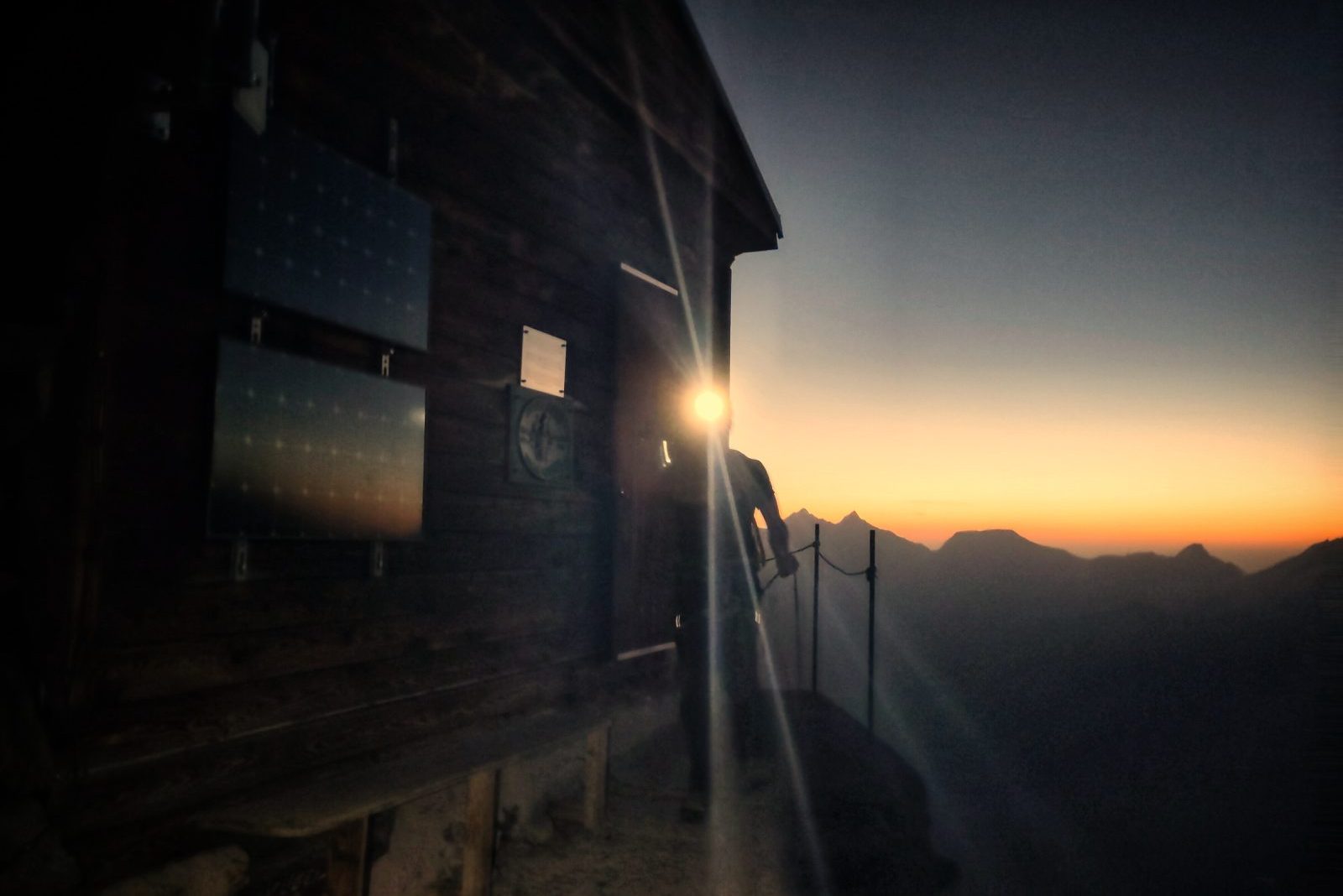
Gondola Zermatt → Schwarzsee · hike to Hörnli Hut · ca. 1.5–2 hrsFrom Zermatt, take the gondola up to Schwarzsee. From there, a steady hike leads to the Hörnli Hut, perched directly below the north-east ridge. Settle in, eat well, sleep early. Tomorrow starts before dawn.
Step 4 — Summit day
Early start · ca. 5–6 hrs to the summit · descent same dayHeadlamp on. Harness on. The route begins before dawn. Fixed ropes guide the most exposed sections of the Hörnligrat — the rock is steep, the air thin, the views limitless. Pitch by pitch to the summit cross at 4478 metres.
Descent — Matterhorn → Hörnli Hut → Zermatt
Same terrain · full concentration to the valleyThe descent demands as much focus as the ascent — often more. Downclimbing the fixed-rope sections, navigating the exposed ridge, step by step back to the Hörnli Hut and on to Zermatt. This is where the Matterhorn climb ends.
How and where do we start?
The Matterhorn is technically and physically demanding. More than the technical difficulty, it is the length of the route and the sustained nature of the descent that define the challenge. You prepare over years, not weeks. The focus: confident movement in pathless terrain, solid crampon technique, and assured downclimbing, including the ability to read the logical line.
The ideal way to acclimatise before the preparation climb is to spend a night or two independently in a high-altitude hut. Three excellent options in the area:
Kinhütte – breathtaking views and a beautiful steep hut trail.
Weisshornhütte – varied and pleasant hut trail.
Bordierhütte – varied and pleasant hut trail.
Plan this independent acclimatisation stay in the days before the preparation climb, and allow a rest day between the preparation climb and the Matterhorn ascent.
Preparing for the Matterhorn climb
Alpinism is not about shortcuts. It is built on principles: principles that guarantee safety, success, and genuine enjoyment in the mountains. Mountaineers should not underestimate the importance of respecting the mountains and the significance of solid preparation. With the right approach and the necessary discipline, Matterhorn becomes an achievable dream for many.
Want to prepare in advance? Join one of my alpine training trips:
→ Alpine Climbing Days in the Dolomites
→ Spring Climbing Days in the Alps
→ Waterfall Ice Climbing for Beginners
Prices
Full packages — preparation climb included
Breithorn Traverse + Matterhorn via Hörnligrat
Alphubel via Rotgrat + Matterhorn via Hörnligrat
Alphubel via Rotgrat + Matterhorn via Liongrat
Accommodation, hut fees, and travel costs are not included in the guiding prices.
Details
- Location
- Zermatt / Mattertal — Valais, Switzerland
- Season
- End of June to late September
- Duration
- Min. 4 days (incl. preparation climb, rest day and summit)
- Participants
- 1:1 – private guiding
- Accommodation
- Individual + Mountain huts
- Travel
- Individual
- Guidance
- Experienced IVBV/UIAGM mountain guide
- Meeting point
- By arrangement
- Required skills
- Confident movement on steep rock and ice (up to ZS+ / 3a) / Solid crampon technique and assured downclimbing / Glacier travel and rope handling / Previous high-altitude experience (3500 m+) / Good physical condition: 1200/1700 vm in a day at altitude / Comfort with sustained exposure over multiple days
 ROCKIN' HIGH