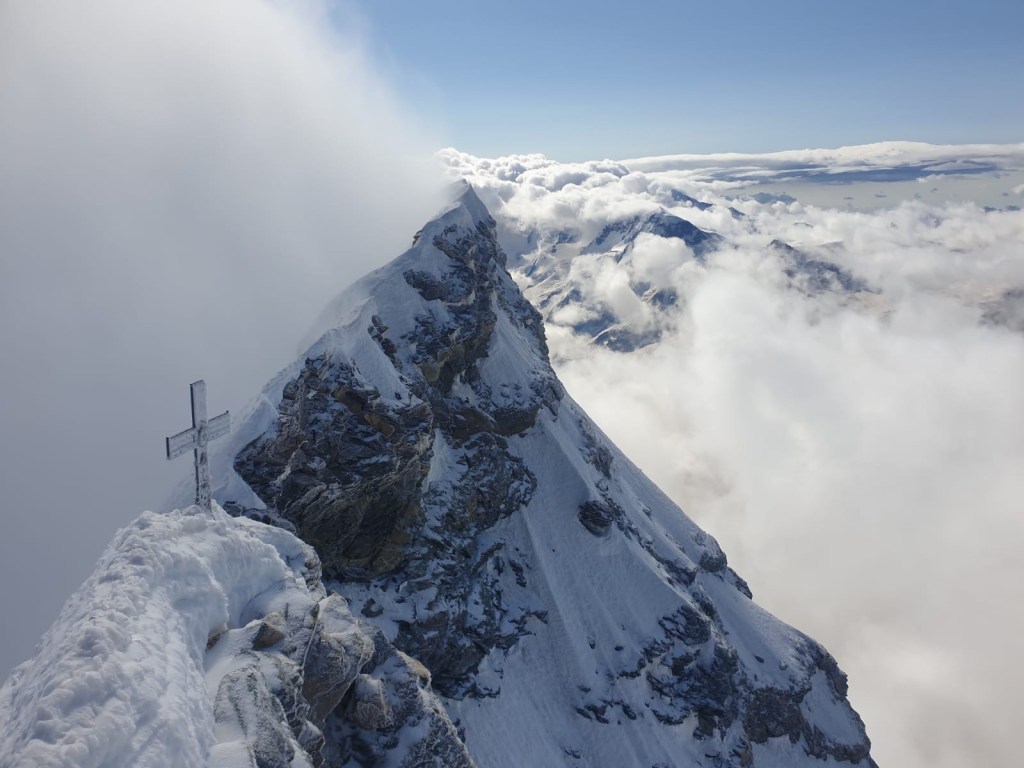
The Matterhorn, an iconic dream for many mountaineers
With its distinctive shape and majestic presence, the Matterhorn is one of the most celebrated peaks in the Alps, attracting countless mountaineers each year. For many climbers, reaching its summit marks a crowning achievement in their careers. Successfully standing on the top of this mountain requires significant preparation, systematic training, and dedication built over years—a true culmination of mountaineering expertise and resilience.
Get in touch >>
DEUTSCHE VERSION
(1) WINTER PREPARATION
Preparing for a Matterhorn ascent ideally starts in winter, focusing on building confidence and skill with crampons. Early-season practice is essential to get comfortable with winter conditions and ice. Waterfall ice climbing courses offer a great foundation, covering fundamental movement and safety techniques.
It’s important to “do your homework” and stay committed to training. Alongside alpine skills, you should also build endurance through activities like mountain biking, cyclocross, and trail running—particularly downhill. These workouts help develop the strength and stamina needed to handle the physical challenges of mountaineering.
(2) SPRING: ROCK CLIMBING AND FREE CLIMBING
In spring, the focus moves to rock climbing, especially free climbing on challenging routes, to sharpen technique and boost confidence. The Jura Mountains and granite cliffs in Central Switzerland are ideal practice grounds. Climbing in different footwear—whether climbing shoes or mountaineering boots—helps you adapt to the diverse demands of the mountain.
https://bastianspeckle.com/2024/09/05/alpine-climbing-days-in-dolomites/
Spring also brings the unique challenge of adjusting to loose rock, which can be especially daunting for those used to more stable surfaces. Consistent practice and reinforcing skills learned along the way are crucial during this phase.
(3) SUMMER: ACCLIMATIZATION AND HIGH-ALTITUDE TOURS
During summer time, acclimatisation takes center stage. Spending several nights at higher elevations is essential to adjust to the thinner air and lower oxygen levels. This season also presents the perfect opportunity to tackle challenging rock routes, like the Pointe de Zinal traverse or Rotgrat on the Alphubel, as well as ice routes such as Castor or Lyskamm.
These high-altitude tours not only boost physical fitness but also help you to better understand the unique conditions of the alpine environment.
(4) FALL: ADVANCING CLIMBING SKILLS
In the fall, focus shifts back to rock climbing, with an emphasis on tackling steeper and longer routes that demand both endurance and precision. Special care should be given to mastering descents, as these can often be more complex and physically demanding than the climb itself.
https://bastianspeckle.com/2024/09/17/swiss-and-gold-autumn-climbing-days/
(5) BUILDING STRENGTH THROUGH CONSISTENT TRAINING
Preparing for a Matterhorn climb is an ongoing process. Skills and techniques learned over each season should be revisited and refined. With consistent training over two to three years, climbers can approach the Matterhorn climb with both confidence and loads of enjoyment.
https://bastianspeckle.com/2024/10/20/advanced-level-ice-climbing-course/
https://bastianspeckle.com/2024/09/05/alpine-climbing-days-in-dolomites/
Reaching the Matterhorn’s summit is more than a physical accomplishment; it’s the result of years of focused preparation, training, and commitment. A deep respect for the mountains and a solid foundation are crucial. With the right approach and discipline, the Matterhorn becomes an achievable goal for many climbers, turning a dream into reality.
GET IN TOUCH >>
Die Allgemeinen Geschäftsbedingungen (AGB) / Terms and conditions
 ROCKIN' HIGH